

Dealing With a Leaky Roof in Winter: Practical Advice for Homeowners
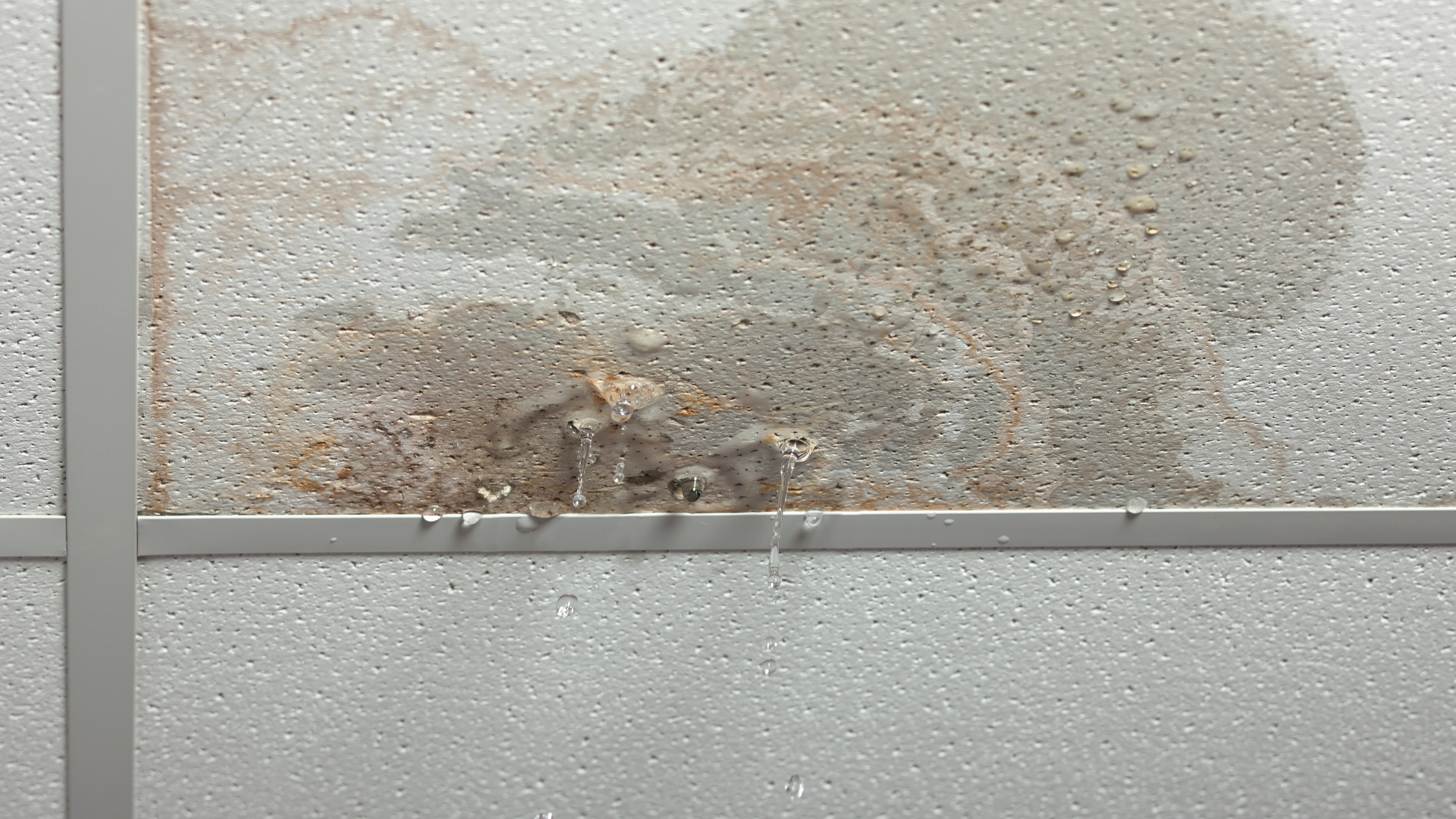
Ceiling panel with visible water intrusion, showing brown stains, bubbling, and active dripping from a roof leak.
Winter is when roof leaks become the most noticeable and the most damaging.
Between snow, freezing rain and rapid temperature drops, even a small problem can quickly turn into a water intrusion, mold growth, and interior damage.
This guide explains why leaks happen, how to spot them, and what you can do now to protect your home before snow and ice arrive.
Why Roofs Leak in Winter
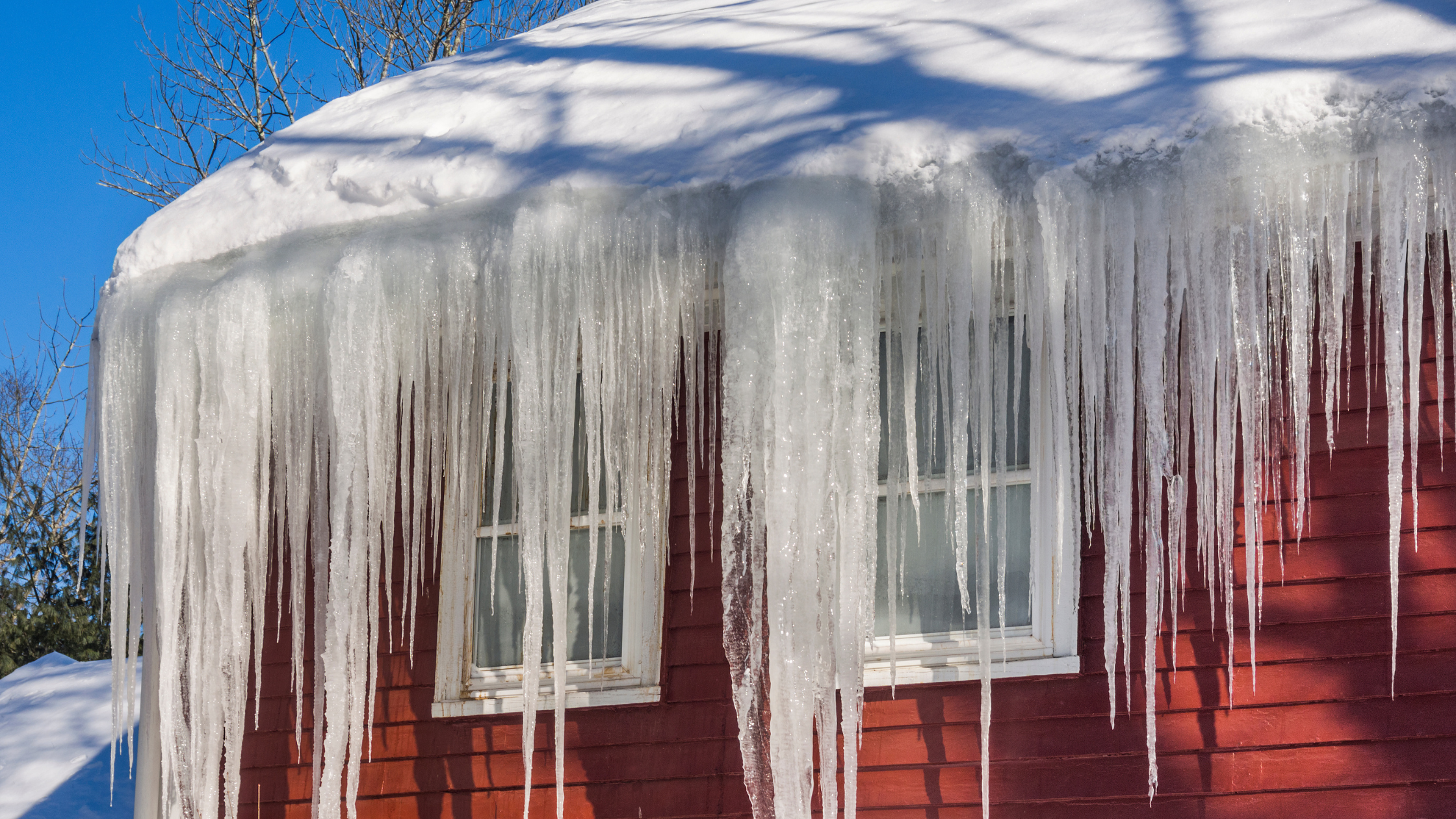
Heavy icicles and a thick ice dam forming along the roof edge of a home after winter snowfall.
Freeze-Thaw Cycles
During winter, temperatures swing above and below freezing. Snow melts during the day, seeps into tiny cracks, then refreezes at night. As the water expands, shingles lift, flashing gaps widen, and leaks begin.
Ice Dams
Ice dams form when warm attic air melts snow on the roof, and the runoff refreezes at the cold roof edge.
This creates a thick ridge of ice that traps water behind it.
That trapped water then backs up under the shingles and leaks in to the home.
Wind & Snow Storms
Winter windstorms can lift shingles, break sealant bonds, bend flashing, and push snow into vulnerable areas like valleys, vents, and chimneys.
Old or Weathered Shingles
Cold weather makes aging shingles brittle. When shingles crack or curl in winter, melting snow easily penetrates the roof system.
Clogged Gutters
Frozen or debris-filled gutters prevent proper drainage. When meltwater cant flow out, it backs up toward the roof edge and seeps inside.
How to Recognize a Winter Roof Leak
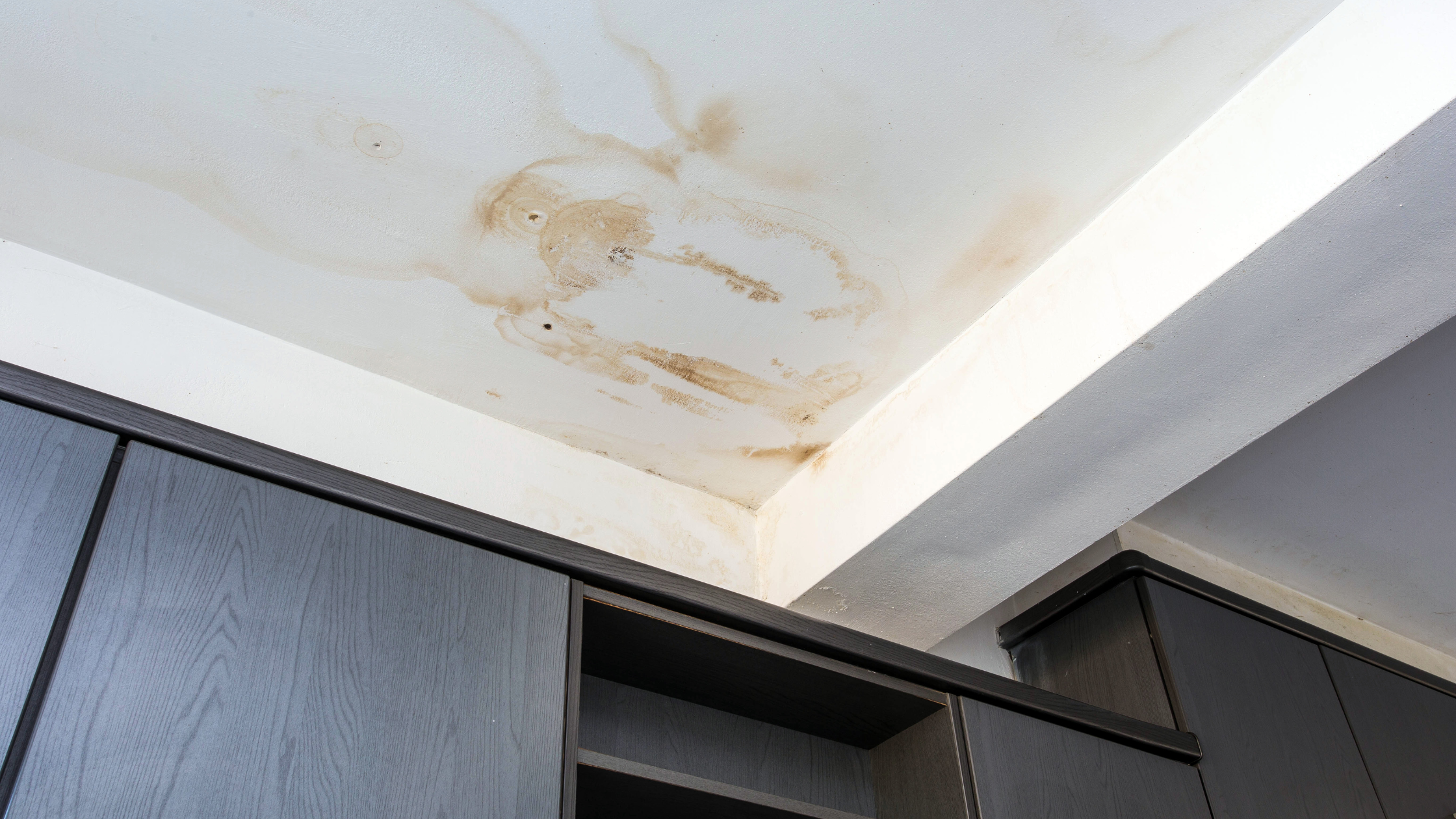
Interior ceiling with large yellow-brown water stains above kitchen cabinets, indicating a roof leak or moisture damage.
Winter leaks don’t always show as obvious drips.
After snow or freezing rain, look for:
Ceilings or walls: Brown or yellow patches mean water is getting through the roof deck.
Dripping during warm-ups: Leaks often appear when temperatures rise above freezing and snow begins melting.
Damp insulation or musty odors in the attic: Moisture often shows up in the attic before showing inside the home.
Water running down walls: This can indicate water entering at the roofline or through damaged flashing.
Ice or frost inside the attic: This means warm, moist indoor air is escaping and freezing in the attic- a sign of ventilation issues.
Large icicles: Not all icicles mean trouble, but icicles + ceiling stains almost always indicate an ice dam.
Immediate Steps When You Discover a Leak
1. Contain the Water
Place a bucket or towels under the drip and move belongings away from the area.
2. Document Everything
Take photos of ceiling stains, attic moisture, ice dams, exterior roof damage, and anything unusual. This will help if you file an insurance claim.
3. Contact Your Insurance Company
If wind, hail or ice damage caused the issue, it may be covered. Storm claims generally do not raise individual rates because insurers spread risk across your entire region.
4. Call a Qualified Roofing Professional
Do not climb onto a snowy or icy roof.
A professional can inspect safely, locate the leak, provide emergency tarping, remove ice dams(if needed), and plan the necessary repair or replacement.
How To Prepare Your Roof For The Rest Of Winter
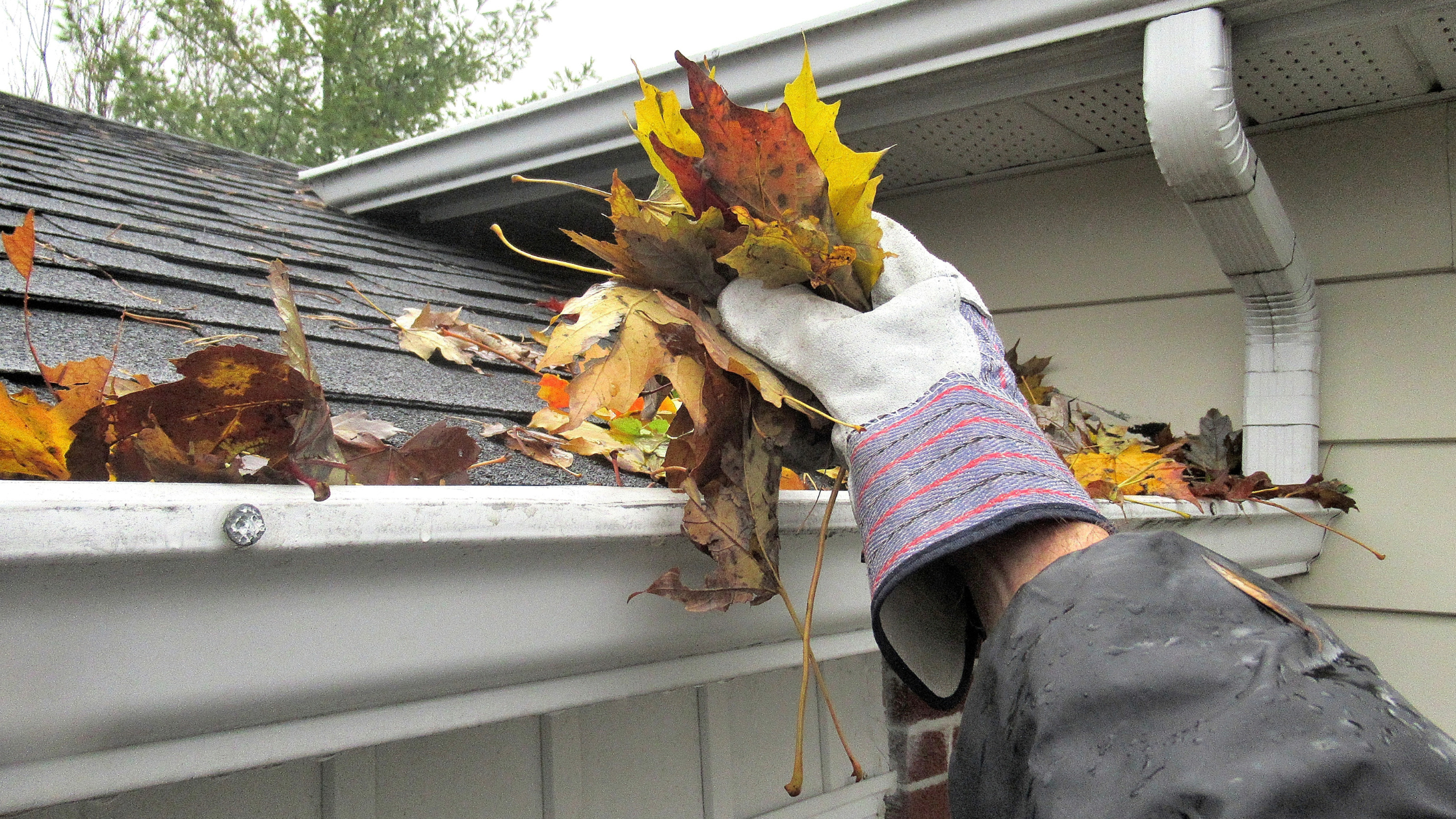
Gloved hand clearing leaves from a gutter to prevent winter clogs, ice buildup, and water damage.
Winter maintenance is critical to preventing ongoing damage.
1.Clean Gutters (Before They Freeze)
Remove leaves, sticks, and debris so melted snow can drain properly.
2.Improve Attic Insulation
Proper insulation reduces heat loss that contributes to ice dams.
3.Ensure Proper Ventilation
A well-ventilated attic stays cold and prevents uneven snowmelt.
4.Seal Flashings & Roof Penetrations
Check around chimneys, vents, and skylights for gaps, cracked caulk, or rusted components.
5.Remove Excess Snow (If Safe)
Use a roof rake to clear snow from the roof edge during heavy storms.
6.Repair Missing or Cracked Shingles
Even one damaged shingle can lead to a major winter leak.
When It’s Time To Consider A Roof Replacement
Some Winter leaks can be repaired, but widespread or repeated issues may signal a failing roof.
Signs you may need a replacement:
Frequent leaks
Curled, brittle, broken or missing shingles
Sagging roof areas
Granule loss
Severe ice damming year after year
Roof age beyond 15-25 years
A reputable contractor will give you multiple options and help you compare costs and materials. Upgrading to impact-resistant shingles can also offer better protection in storm-prone areas.
Stay Ahead Of Winter Roof Problems
By understanding how winter impacts your roof- specially in Nebraska’s cold, windy climate- you can prevent costly damage.
If you notice leaks, ice dams, unusual stains, or snow-related issues, addressing them early is the best way to protect your home. Small winter leaks often become major problems by spring if left unattended.
Seasonal inspections - especially after storms - extend your roof’s lifespan and help prevent expensive winter damage.
Final Advice
If you see signs of a leak or notice storm damage, don’t wait. Problems caught in early December are far easier (and far cheaper) to fix than water intrusion under January’s snow.
With quick action and the right roofing professional, your home stays dry, protected, and ready for winter.
If you’re in Omaha, Bellevue, Papillion, La Vista, Gretna, Ralston, or nearby areas and you’re noticing signs of a roof leak, don’t wait for the next round of rain or snow to make things worse. Even a small leak can spread quickly during Nebraska’s freeze–thaw cycles.
You don’t have to figure it out alone - a quick inspection can give you peace of mind and help you avoid bigger repairs later. We’re here to help you protect your home, answer your questions, and point you in the right direction, whether you need a simple repair or just professional reassurance.
